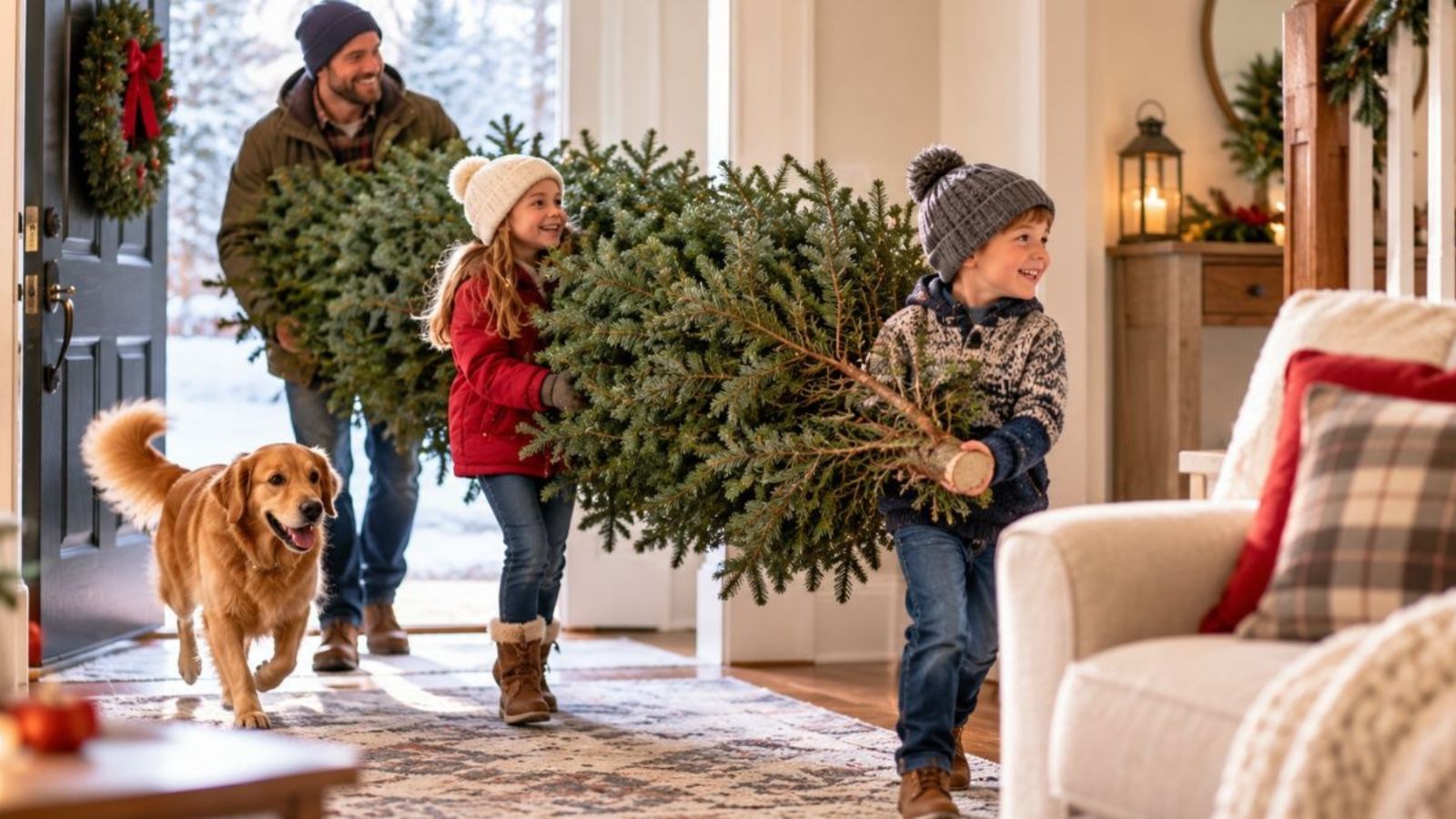
Every holiday season, homeowners bring fresh-cut Christmas trees indoors for their appearance, fragrance, and traditional appeal. However, branches and needles can also carry insects, spiders, and other small organisms that live outdoors. Finding bugs in real Christmas trees may be surprising, but it does not necessarily mean the home has a pest infestation.
Some organisms remain dormant during cold weather and become active when exposed to indoor warmth. Knowing what to look for and how to inspect a tree can help homeowners avoid unwanted visitors during the holidays.
Why Christmas Trees Bring Bugs Indoors
Outdoor trees provide insects and other small organisms with food and shelter. Some lay eggs on evergreen trees, while others spend the winter in a dormant state.
When a tree enters a heated home, the temperature change can activate dormant organisms or cause eggs to hatch earlier than usual. This may lead to insects or small spiders appearing near the tree.
These organisms arrive with the tree rather than being attracted to the home. Finding a few does not automatically indicate a larger pest problem.
Common Bugs in Real Christmas Trees
Several insects and other small organisms may be found on fresh-cut trees. They can hide among Christmas tree branches or beneath the bark.
- Aphids: Small, soft-bodied insects that may feed on conifers and become active indoors.
- Adelgids: Tiny, aphid-like insects that feed on plant sap and leave white, cottony deposits. They generally remain attached to the tree.
- Spiders: Small spiders or spiderlings may emerge from branches or egg sacs and sometimes leave webs nearby.
- Mites: Some predatory mites overwinter on trees and become active indoors. They are generally harmless to people and pets. Abandoned bird nests, however, can harbor parasitic bird mites.
- Bark beetles: These insects develop beneath the bark of stressed or dying trees. Small exit holes and fine, sawdust-like material may indicate their presence.
- Praying mantis egg cases: Brown, hardened, foam-like structures attached to branches may hatch prematurely in a warm home, releasing dozens of tiny mantises.
Spiders and mites are not insects, but homeowners may encounter them among tree branches. Most of these organisms depend on outdoor plants and conditions and do not establish themselves inside homes.
Can Christmas Tree Bugs Damage Your Home?
Most organisms brought inside on Christmas trees are temporary visitors rather than household pests. Many cannot survive without their natural food sources or outdoor conditions.
Common concerns include:
- Furniture damage: Most Christmas tree hitchhikers do not infest household furniture or dry structural lumber.
- Houseplants: Many conifer-feeding insects are host-specific and cannot survive on unrelated indoor plants.
- Health concerns: Most tree-associated organisms are harmless, although bird mites from abandoned nests deserve attention.
- Ongoing activity: Repeated sightings in different areas may indicate another pest source.
Bark and ambrosia beetles, for example, need relatively moist wood to survive. Dry household lumber and furniture generally do not provide suitable conditions for them to establish themselves.
Bird nests should be removed before a tree enters the home because they can harbor mites and other parasites.
How to Check a Christmas Tree for Bugs
Inspecting a tree before bringing it indoors can reduce the number of organisms that enter the home. Pay particular attention to:
- Branches and needles: Look for insects, clusters, or webbing among the inner branches.
- Trunk: Check the tree trunk for small holes, residue, or fine sawdust-like material.
- Twigs and bark: Look for egg cases, white cottony deposits, or attached nests.
Take these precautions before setting up the tree:
- Shake the tree outdoors. Ask the seller whether a mechanical tree shaker is available. Shaking can dislodge many insects and other small organisms.
- Remove visible nests and egg cases. If you find a praying mantis egg case, cut off the twig and place it in an outdoor shrub so the eggs can hatch naturally when the weather warms.
- Inspect the tree again. Check the branches and trunk before placing the tree in its stand.
- Clean the setup area. Remove loose needles and debris before decorating.
Performing these steps outside helps keep dislodged organisms away from indoor floors, furniture, and decorations.
What to Do About Christmas Tree Bugs
Some organisms may still emerge after the tree is indoors. In most cases, physical removal is enough.
- Vacuum visible insects from floors, walls, and windowsills.
- Avoid disturbing attached organisms such as adelgids, which generally remain on the tree.
- Monitor nearby areas for continued activity.
Avoid spraying insecticides directly onto a Christmas tree. Some aerosol products are flammable or are not labeled for this use. Applying chemicals to a tree kept indoors can also create unnecessary exposure for household members and pets.
If insects continue appearing after the tree has been removed, the source may be something other than the tree. A professional inspection can help identify the source of persistent pest activity.
Enjoy the Holidays Without Bugs
Real Christmas trees can carry insects and other small organisms, but most are temporary outdoor visitors rather than household pests. Inspecting and shaking the tree outdoors and removing visible nests or egg cases can reduce the chances of bringing them inside.
If pest activity continues after the tree is gone, identifying the source can help determine whether a separate pest control issue needs attention.
Frequently Asked Questions
Should I leave a real Christmas tree outside before bringing it indoors?
A brief inspection and outdoor shaking are generally more useful than leaving the tree outside for an extended period. Cold temperatures may keep insects dormant rather than eliminate them.
Can bugs from a Christmas tree spread to other houseplants?
Most insects found on Christmas trees feed on specific outdoor plants, such as conifers. They generally cannot survive on unrelated houseplants.
How long can Christmas tree bugs survive indoors?
It depends on the organism. Many tree-associated pests die because indoor conditions do not provide the food or humidity they need. Others may remain on the tree until it is removed.
Should I use an insecticide on my Christmas tree before bringing it inside?
No. Insecticides are generally unnecessary for tree hitchhikers. Some aerosol products are flammable or not labeled for use on indoor Christmas trees. Outdoor shaking and physical removal are safer approaches.
Does buying a more expensive Christmas tree guarantee it is bug-free?
No. Price, appearance, and freshness do not guarantee that a tree is free of insects or egg cases. Even healthy-looking trees may carry organisms that overwinter on their branches or beneath the bark.
Hire a Professional – ABC Termite & Pest Control Company – Omaha & Lincoln
If you’re concerned about pest infestations or want a professional to evaluate your home’s pest prevention strategies, don’t hesitate to reach out to a local Nebraska pest control expert.
Find a reputable pest control company in Omaha or Lincoln that you TRUST. Ask about their termite inspection and pest management services. You may think you are saving money; however, a single misapplication could have significant and adverse or deadly consequences for you or your loved ones. Contact ABC Termite & Pest Control in Omaha & Lincoln, NE to talk with an exterminator today!