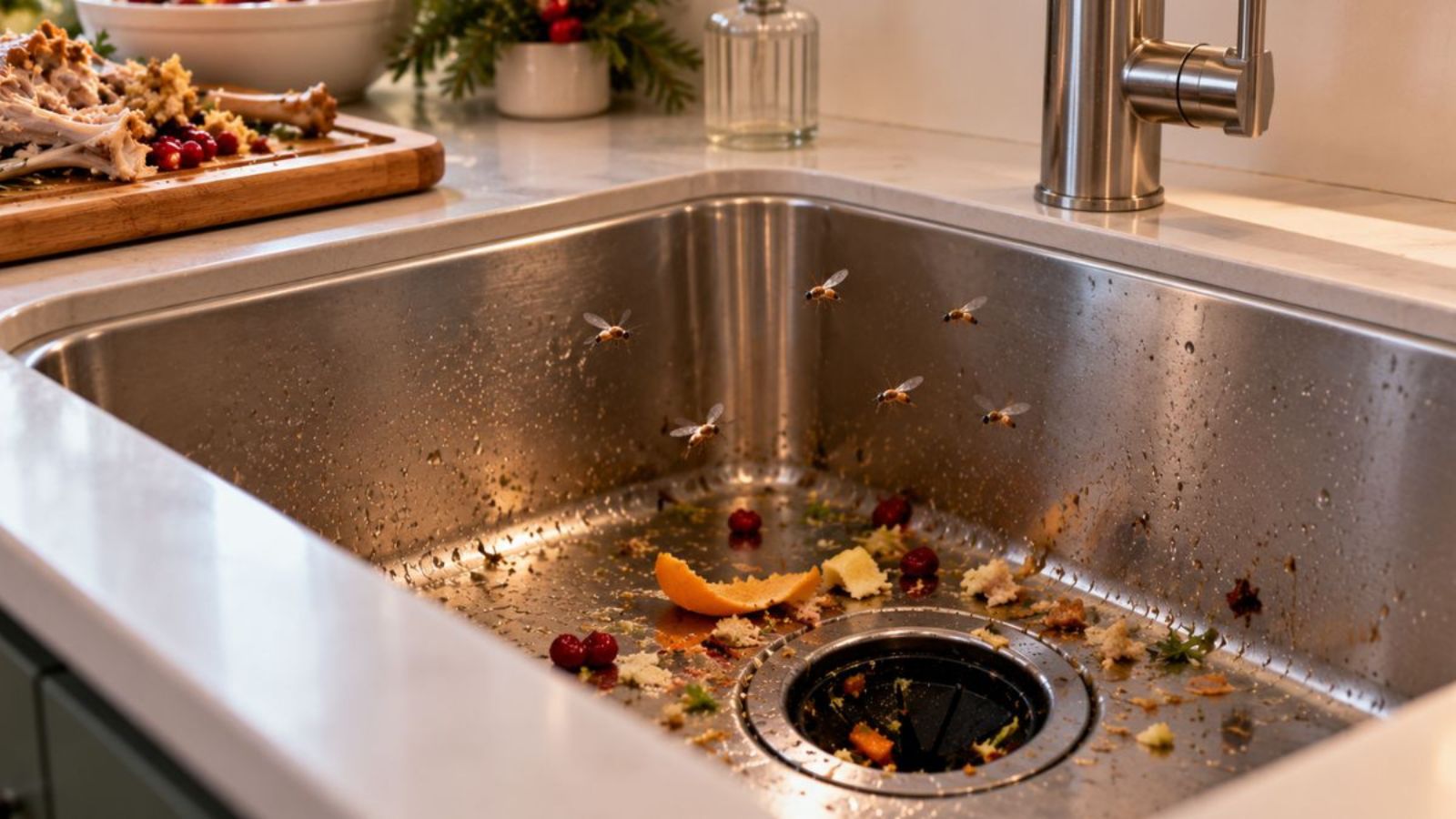
Holiday gatherings often leave kitchens with more food waste, fuller trash cans, and less attention to routine cleaning. Forgotten food containers, grease-coated dishes, and scraps left in the sink can attract nuisance flies.
Spoiled holiday leftovers become a concern when food particles and grease enter drains and contribute to organic buildup. These damp areas can provide the conditions drain flies need to reproduce. Understanding their breeding habits helps homeowners identify and prevent recurring problems.
Breeding Conditions Created by Spoiled Holiday Leftovers
Holiday meals often include meats, vegetables, gravies, sauces, and desserts. Small amounts of food can remain in containers, trash bins, and kitchen plumbing after cleanup.
Drain flies, also called moth flies, lay their eggs in the soft organic film that forms along the inside walls of moist drains. Their larvae feed on this material as they develop.
Food particles and grease can contribute to this buildup when they enter the sink and become trapped in pipes. Running water may remove loose debris but will not necessarily dislodge residue stuck to pipe walls.
The distinction is important:
- Discarded leftovers: Food in trash containers can attract fruit flies and other nuisance flies.
- Organic drain buildup: Moist residue along drain walls provides a breeding site for drain flies.
- Accumulated grease: Grease can trap food particles and contribute to organic film inside pipes.
Drain flies need organic material coating damp surfaces, not simply standing water. Removing this buildup is essential to controlling their development.
Kitchen Areas That Attract Small Flies
The kitchen sink is an obvious place to investigate, but holiday cooking and cleanup can leave residue in other overlooked areas.
- Garbage disposals: Food particles can collect beneath the rubber splash guard.
- Drain openings: Grease and food residue can contribute to organic buildup.
- Trash containers: Leaking food packaging, meat juices, and leftovers can attract other small flies.
- Under-sink cabinets: Plumbing leaks and food spills can create damp conditions.
- Recycling containers: Unrinsed bottles and cans may retain sugary residues that attract fruit flies.
Not every small fly around the kitchen is a drain fly. These differences can help identify the likely source:
| Type of Fly | Common Breeding Source |
|---|---|
| Drain flies | Moist organic buildup inside drains |
| Fruit flies | Fermenting produce and sugary residues |
| Phorid flies | Decomposing organic waste |
Identifying the insect helps homeowners focus their inspection and avoid treating the wrong source.
Signs of Drain Fly Activity
Drain flies are small, dark insects with fuzzy bodies and wings resembling tiny moths. They are weak fliers and often rest on walls, ceilings, and surfaces near drains.
Common warning signs include:
- Small, moth-like flies near sinks or drains.
- Repeated activity around the same drain.
- Unpleasant odors coming from kitchen plumbing.
- Sludge or slimy residue around drain openings.
- Flies continuing to appear after visible food scraps are removed.
Seeing flies near a sink does not necessarily mean they are breeding inside it. Adults can move away from their original breeding location.
Checking a suspected drain:
- Place clear tape, sticky side down, over part of the drain opening.
- Leave a small gap for airflow.
- Check after several hours or overnight.
- Flies caught underneath may indicate that adults are emerging from the drain.
If no flies appear, inspect other drains, floor drains, and areas with plumbing leaks.
Steps for Removing Drain Fly Breeding Conditions
Removing adult flies is only part of the solution. The priority is eliminating the organic material where their eggs and larvae develop.
Begin by removing holiday food waste and cleaning affected areas:
- Empty garbage containers and discard leftovers.
- Wash surfaces with food spills or residue.
- Check beneath the sink for leaks.
- Inspect drains and garbage disposals for accumulated debris.
For suspected drain infestations, follow these steps:
- Clean the drain opening. Remove visible debris and scrub accessible areas with an appropriate drain brush.
- Inspect the garbage disposal. Clean beneath the rubber splash guard, where food particles may collect.
- Remove organic buildup. Use a suitable enzyme-based drain cleaner according to its label. Physical scrubbing may also be necessary.
- Check for moisture problems. Inspect plumbing connections and cabinets beneath the sink for leaks.
- Monitor fly activity. Continue checking the area to see whether the suspected source has been eliminated.
Avoid relying on bleach or simply pouring hot water down the drain. These methods may not remove the organic film where larvae develop. Never mix bleach with other drain cleaners or household chemicals.
Persistent activity may indicate a hidden breeding source, such as an infrequently used floor drain, leaking plumbing, or buildup deeper in the drain system.
Habits That Help Prevent Another Infestation
Consistent kitchen cleanup helps prevent the food residue and moisture that contribute to fly problems.
Homeowners can follow these precautions:
- Refrigerate or freeze perishable leftovers promptly.
- Scrape food scraps into a sealed garbage bag before washing dishes.
- Avoid pouring grease, cooking oils, and large food particles into drains.
- Clean garbage disposal components regularly.
- Wash trash containers after leaks or spills.
- Rinse recyclable food and beverage containers.
- Repair plumbing leaks and dry damp areas beneath sinks.
These habits are especially useful after holiday gatherings, when increased food preparation can leave residue in overlooked areas.
Keeping Holiday Kitchens Free of Drain Flies
Spoiled holiday leftovers can contribute to drain fly problems when food residues add to organic buildup in damp drains. Removing that buildup, cleaning affected areas, and correcting leaks help eliminate breeding conditions and reduce recurring activity.
When flies persist despite routine cleaning, ABC Termite & Pest Control provides residential and commercial pest control services in Omaha, Lincoln, and surrounding Nebraska communities.
Frequently Asked Questions
Can spoiled food in the trash produce drain flies?
Not usually. Drain flies breed in moist organic buildup inside drains. Discarded food in trash containers is more likely to attract fruit flies and other nuisance insects.
Do drain flies come out more often at night?
Drain flies are often more noticeable in low-light conditions. During the day, they may rest on walls, ceilings, and surfaces near their breeding sites.
Can drain flies develop in unused drains?
Yes. Infrequently used plumbing fixtures can accumulate organic residue. Maintaining water in drain traps and cleaning accessible surfaces can help reduce problems.
Are drain flies harmful to people or pets?
Drain flies do not bite or sting people or pets. However, persistent populations can indicate organic buildup or moisture problems that need attention.
How long does it take to eliminate drain flies?
The timeline depends on the infestation and how quickly the breeding source is removed. Adult flies may continue emerging while immature stages remain in the organic material. Buildup deeper in the plumbing may require additional inspection.
Hire a Professional – ABC Termite & Pest Control Company – Omaha & Lincoln
If you’re concerned about pest infestations or want a professional to evaluate your home’s pest prevention strategies, don’t hesitate to reach out to a local Nebraska pest control expert.
Find a reputable pest control company in Omaha or Lincoln that you TRUST. Ask about their termite inspection and pest management services. You may think you are saving money; however, a single misapplication could have significant and adverse or deadly consequences for you or your loved ones. Contact ABC Termite & Pest Control in Omaha & Lincoln, NE to talk with an exterminator today!